
Development
happens together.
We're building the shared understanding, practices and institutional connections needed to strengthen youth development across the UK.
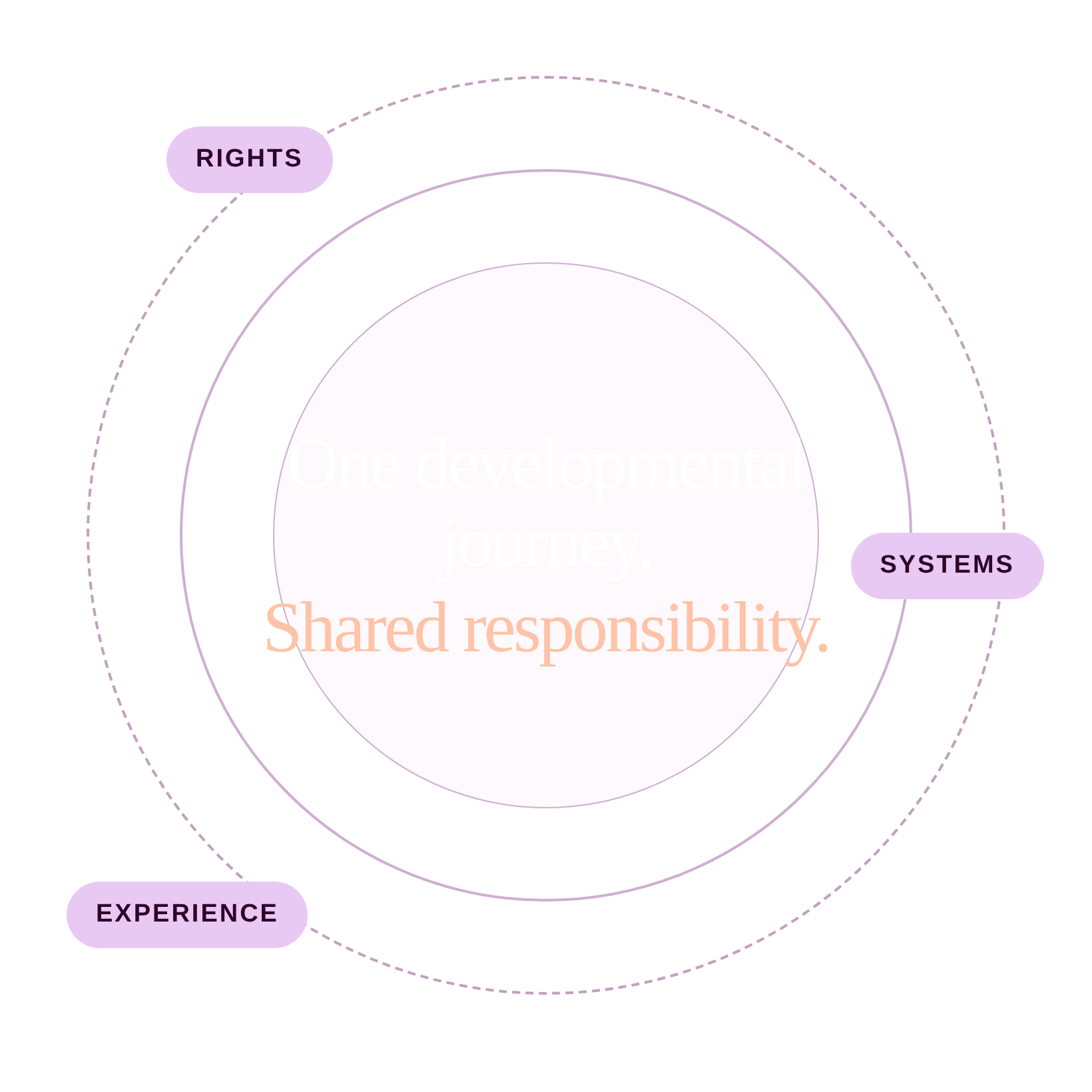
OUR CENTRAL COMMITMENT
To redefine how adolescence and youth development are understood, supported and stewarded across society.
OUR PURPOSE
From fragmented systems to a connected approach.
01 / UNDERSTAND
Shared developmental understanding
We develop common frameworks that help different professions and institutions understand adolescence without erasing their distinctive expertise.
02 / CONNECT
Experience and responsibility
We create structured ways for young people's experiences and professional knowledge to inform decisions and institutional learning.
Youth development is not one service or programme. It is shaped by the systems, relationships and opportunities surrounding young people's lives.
03 / CHANGE
Stewardship and systems
We work towards stronger place-based coordination, national responsibilities and lasting conditions for development.
OUR ORGANISATIONAL MODEL
Three levels. One mission.
LEVEL 01
Insight-Led Change
Bringing lived adolescent and professional experience into structured understanding, interpretation and influence.
Common Rooms · Campaigns · Insight
LEVEL 02
Place-Based Change
Strengthening shared developmental learning, youth engagement and institutional accountability within places.
Multi-Agency Youth Development Partnerships
Each level informs the others. No part of YOUTHOOD's change model is intended to operate in isolation.
LEVEL 03
National Statutory Change
Translating experience, evidence and practice into stronger national stewardship, policy and statutory proposals.
YOUTHOOD Policy Agenda
The connection matters.
Insight informs place. Place tests and develops understanding. Both inform national change. National change should strengthen the conditions in which local youth development occurs.
OUR MISSION, 2026-2030
Building the foundations for a stronger youth development settlement.
YOUTHOOD is a newly formed youth development infrastructure organisation with a long-term ambition: to redefine how youth development is understood, supported and sustained across society.
Our first mission period, 2026–2030, is about establishing the foundations for that ambition. We are developing shared frameworks, creating opportunities for young people and professionals to influence change, strengthening place-based partnerships and advancing a national conversation about our collective responsibility for youth development.
We recognise that meaningful systems change cannot be achieved by one organisation, nor within a single strategic period. By 2030, however, we want to have helped establish a clearer direction for how the UK's youth-facing landscape understands and responds to adolescence.
#REDEFINEYOUTHDEVELOPMENT
What we want to see by 2030
01. A stronger shared understanding of youth development
We want the National Architecture for Youth Development (NAYD) to have established a meaningful foundation for shared learning and practice across different youth-facing sectors.
Our ambition is to see more professionals, organisations and decision-makers understanding youth development as a connected developmental journey, rather than a collection of separate services, interventions and outcomes.
02. Young people's experiences connected to meaningful influence
We want to have strengthened how institutions engage with young people, interpret their experiences and demonstrate how those contributions influence decisions.
Through Common Rooms, Insight-to-Influence and our wider participation approaches, we intend to help move youth engagement beyond listening exercises towards more transparent, traceable and accountable influence.
03. Place-based partnerships demonstrating shared developmental stewardship
We want to establish and develop our first Multi-Agency Youth Development Partnerships (MYDPs), demonstrating how local authorities, youth-facing services and wider institutions can work together around shared developmental responsibilities.
Our ambition is to generate practical learning about how coordinated leadership, professional development, youth insight and institutional accountability can strengthen youth development within places.
04. A clearer national direction for youth development
We want YOUTHOOD's Policy Agenda to contribute meaningfully to national discussions about youth development, statutory responsibilities, regional leadership, equitable access and institutional accountability.
By 2030, we aim to have developed credible reform proposals, strengthened relationships with relevant decision-makers and contributed to building the case for a more coherent national youth development settlement.
Building responsibly. Learning continuously.
We recognise that these ambitions depend on developing YOUTHOOD's own capacity, governance, financial sustainability and institutional credibility.
Throughout this mission period, we will review our priorities, learn from young people and professionals, respond to emerging evidence and remain transparent about our progress, limitations and decisions.
Our commitment is not to promise that youth development will be transformed by 2030. It is to help establish the knowledge, relationships, infrastructure and institutional momentum needed to make lasting transformation possible.
Development happens together.
GOVERNANCE & ACCOUNTABILITY
Accountability belongs in the architecture.
01 / OVERSIGHT
Governance
Organisational oversight, scrutiny, risk and stewardship of long-term mission integrity.
02 / LEADERSHIP
Executive responsibility
Named leadership for strategy, operational coordination, organisational controls and decision-making.
03 / INFLUENCE
Youth participation
Structured opportunities for young people to contribute insight, challenge and accountability within clearly defined decision boundaries.
These functions are connected but not interchangeable. Youth participation does not automatically confer legal governance authority, and shared delivery does not remove named accountability.
HOW WE HOLD OURSELVES
Our standards and commitments.
The credibility of our work depends on how we work, not only what we propose.
We seek to work with curiosity, integrity, respect for professional responsibility and a clear commitment to young people's rights. Our standards should evolve through learning, scrutiny and responsible practice.
-
Young people are present rights-holders. Our work should protect dignity, access, participation, identity and equity, including recognition of different starting points.
-
Participation requires preparation, an honest account of decision boundaries, routes into influence, feedback and accountability.
-
No profession holds the whole developmental picture. We support work across disciplines while recognising each organisation's duties and expertise.
-
Safeguarding, ethical use of lived experience, confidentiality and responsible information handling must be built into delivery and organisational controls.
-
Public-facing organisational information should distinguish commitments already adopted from governance arrangements and policies still in development.