
The case for youth development.
Young people experience life across relationships, services and systems. Why, then, do we so often organise responsibility for their development in isolation?
Our starting point is rights. Our challenge is to make existing responsibilities work more coherently around young people's lives.
01 / UNDERSTANDING THE MISSION
More than a service. More than a programme.
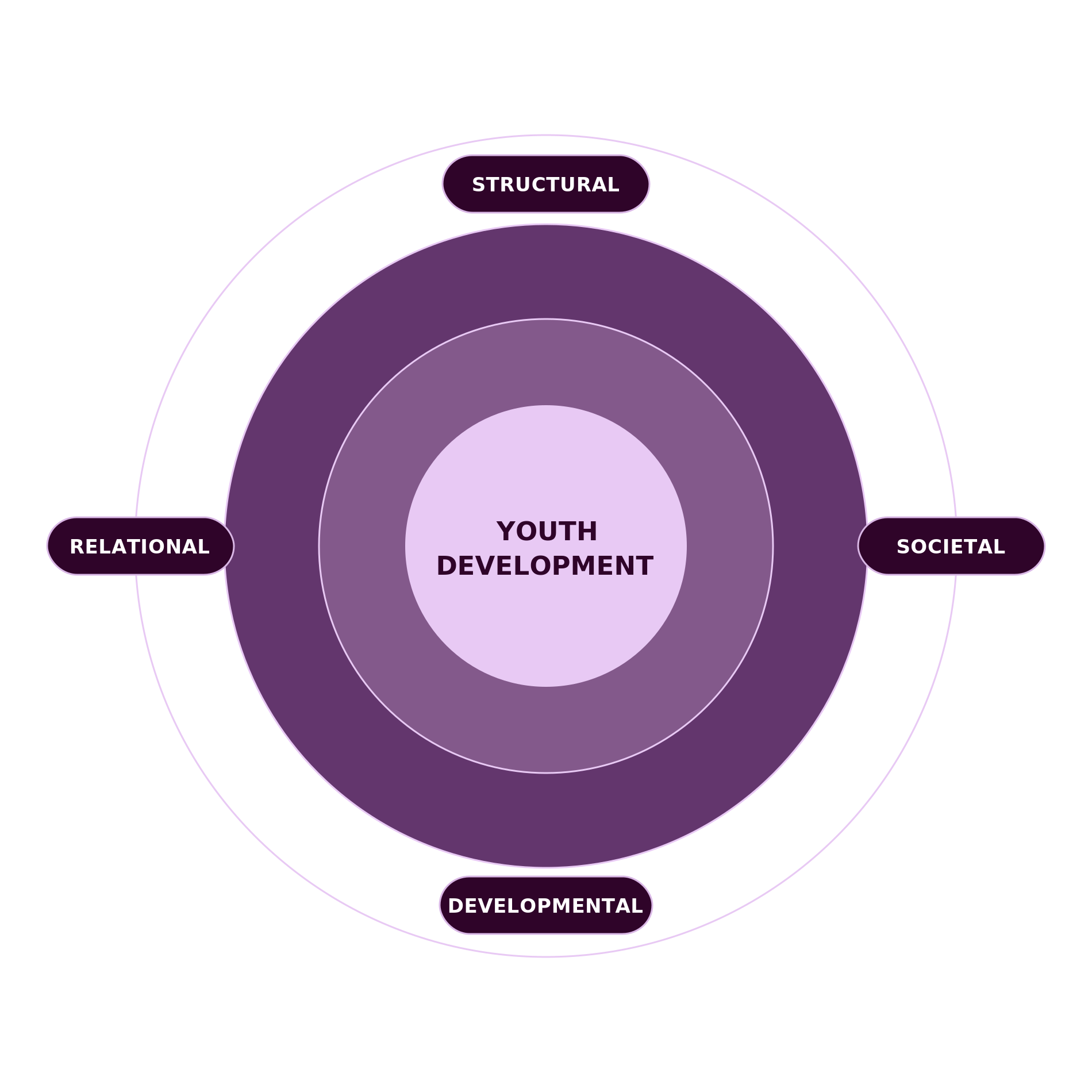
Youth development is shaped by the conditions around young people, not simply the activities offered to them.
That includes the relationships they build, the institutions they encounter, their opportunities to take part and the ways they are supported through change.
Structural
Systems, institutions and opportunity
Relational
Trust, belonging and connection
“Youth development is a structural and relational function of society that determines how young people grow, learn, connect and transition into adulthood.”
YOUTHOOD protected organisational definition
Societal
Shared responsibility across contexts
Developmental
Growing, learning, connecting and transitioning
02 / OUR CASE FOR CHANGE
Three gaps. One connected challenge.
01 / EXPERIENCE
The Experience Gap
Young people's developmental realities can become fragmented across services, systems and institutional categories. What appears connected on paper may be experienced as separate or difficult to navigate.
02 / LANGUAGE
The Language Gap
Different professions and organisations may interpret the same situation through different concepts, duties and forms of knowledge. Without shared understanding, important connections can be missed.
Different parts of society hold important responsibilities for young people. The challenge is that experience, understanding and stewardship do not always connect.
03 / STEWARDSHIP
The Stewardship Gap
Responsibilities relevant to youth development exist across institutions, but coherent stewardship of youth development as an interconnected whole remains limited.
Our mission is not to erase professional differences. It is to strengthen what becomes possible when different responsibilities and perspectives are connected.
03 / RIGHTS FIRST
Young people are rights-holders. Not just future adults.
ARTICLE 3
Best interests
ARTICLE 12
Views and participation
ARTICLE 31
Rest, leisure and culture
A selection of relevant rights, not the full Convention. Legal effect and application differ across UK jurisdictions.
The UN Convention on the Rights of the Child informs YOUTHOOD's approach to dignity, development, non-discrimination, best interests, participation, identity, protection and evolving capacities.
The rights foundation is not an optional extra to youth development. It shapes how we understand young people's experiences and how public responsibility should be exercised.
ARTICLE 2
Non-discrimination
ARTICLE 6
Life, survival and development
ARTICLE 29
Aims of education
04 / STATUTORY & RIGHTS SPINE
Existing duties. A shared developmental question.
YOUTHOOD's mission connects to responsibilities already held across education, children's services, equality and independent scrutiny.
Explore five statutory anchors. Each has its own scope and legal purpose. Together they demonstrate why the case for connected youth development is grounded in existing public responsibilities.
-
Concerns the duties of relevant local authorities in England relating to sufficient educational and recreational leisure-time activities and facilities for qualifying young people, including provision supporting personal and social development and consideration of young people's views.
-
Provides a basis for local-authority arrangements to promote cooperation with relevant partners in improving children's wellbeing. Its focus on cooperation helps explain the importance of coordinated, rather than isolated, institutional responsibility.
-
Requires relevant local education authorities, when exercising applicable education functions, to promote high standards, fair access to educational opportunity and the fulfilment of learning potential.
-
Establishes the Public Sector Equality Duty, including due regard to eliminating discrimination, advancing equality of opportunity and fostering good relations. It supports attention to how public decisions affect people differently.
-
These provisions form part of the legal framework relating to the Children's Commissioner for England, including the promotion and protection of children's rights, views and interests and the Commissioner's statutory functions.
Existing responsibilities are not one combined duty.
These five provisions have different purposes, legal scopes and institutional owners. YOUTHOOD does not claim that they create a comprehensive statutory youth-development duty. Our case concerns the connections between existing responsibilities, and the further standards and reform needed where those connections remain weak.
ⓘ The descriptions above are concise introductions, not legal advice. Review the linked legislation and relevant jurisdictional guidance when making legal or commissioning decisions.
05 / FROM UNDERSTANDING TO ACTION
Responsibility already exists. Connection must become stronger.
YOUTHOOD works across Insight-Led, Place-Based and National Statutory Change to connect lived experience, institutional stewardship and wider reform.
Insight informs place. Place tests and develops understanding. Both inform national change. National change should improve the conditions in which local youth development occurs.